Preserving endangered languages and local knowledge
Learning tools and community initiatives in cross-cultural discussion
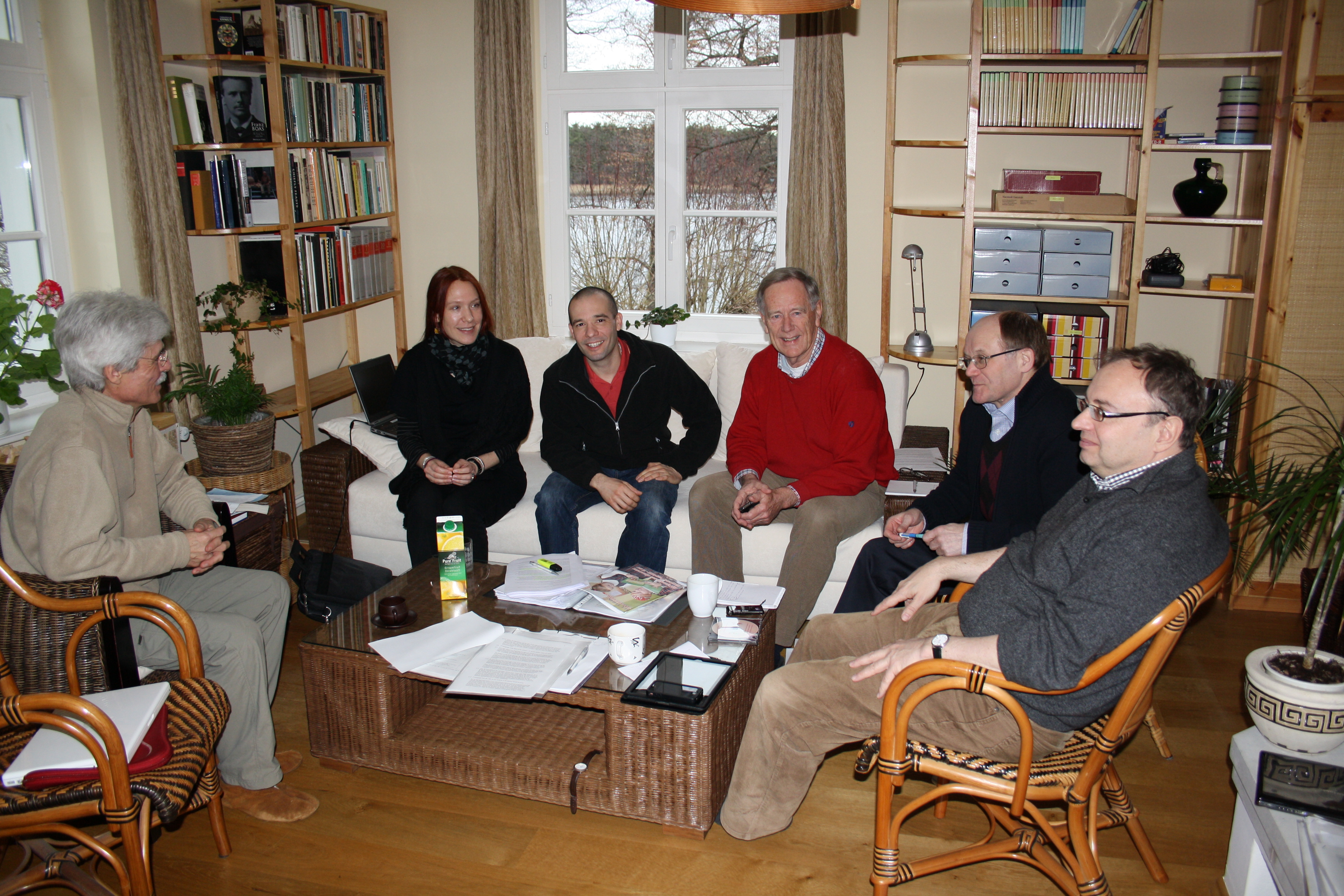
Workshops an der Kulturstiftung Sibirien, organisiert von Erich Kasten und Tjeerd de Graaf
Ein erster Workshop vom 2-6. Oktober 2011 behandelte vor allem Fallbeispiele zu Nordostsibirien:
- Learning tools on languages and traditional knowledge in Kamchatka (Erich Kasten, Kulturstiftung Sibirien).
- Anthropology and applied anthropology in Siberia: questions and solutions around a nomadic school among Evenk reindeer herders (Alexandra Lavrillier, University of Versailles).
- Learning your endangered mother tongue in a small multilingual community: the case of the Tundra Yukagir in Andriushkino (Cecilia Odé, University of Amsterdam).
Während eines zweiten Workshops vom 5-8. Januar 2012 wurden vor allem Beiträge zu Westsibirien und vergleichende Perspektiven zum Friesischen und zu den Yi in China diskutiert.
- The use of sound archives for the investigation and teaching of some endangered Uralic languages (Victor Denisov, Udmurt Institute for History, Language and Culture, Iszhevsk, Russia, and Tjeerd de Graaf, Fryske Academy, Leeuwarden, the Netherlands).
- Revitalisation of two endangered languages in Eastern Asia: Nivkh and Ainu (Tjeerd de Graaf, Fryske Academy, Leeuwarden, the Netherlands, and Hidetoshi Shiraishi, Sapporo Gakuin University, Japan).
- Challenging the state educational system in Western Siberia: Taiga school and multimedia center on the Tiuitjakha river (Stephan Dudeck, University of Lapland, Rovaniemi, Finland).
- Multilingualism and language teaching in Europe: The case of Frisian and the work of the Mercator Research Centre (Tjeerd de Graaf and Cor van der Meer, Fryske Academy, Leeuwarden, the Netherlands).
- Cultural awareness equals language preservation? Virtual platforms, language and culture in a Chinese minority context: the example of the Yi (Olivia Kraef, Freie Universität Berlin).
Weitere Diskussionsteilnehmer waren Teresa Valiente und Michael Dürr (Lateinamerika-Institut der Freien Universität Berlin).
Die Ergebnisse erschienen in dem Sammelband Sustaining Indigenous Knowledge: Learning Tools and Community Initiatives for Preserving Endangered Languages and Local Cultural Heritage und auf der DVD Sustaining Indigenous Knowledge: Comparative Views on Indigenous Learning Situations from Russia, Peru and Papua New Guinea.